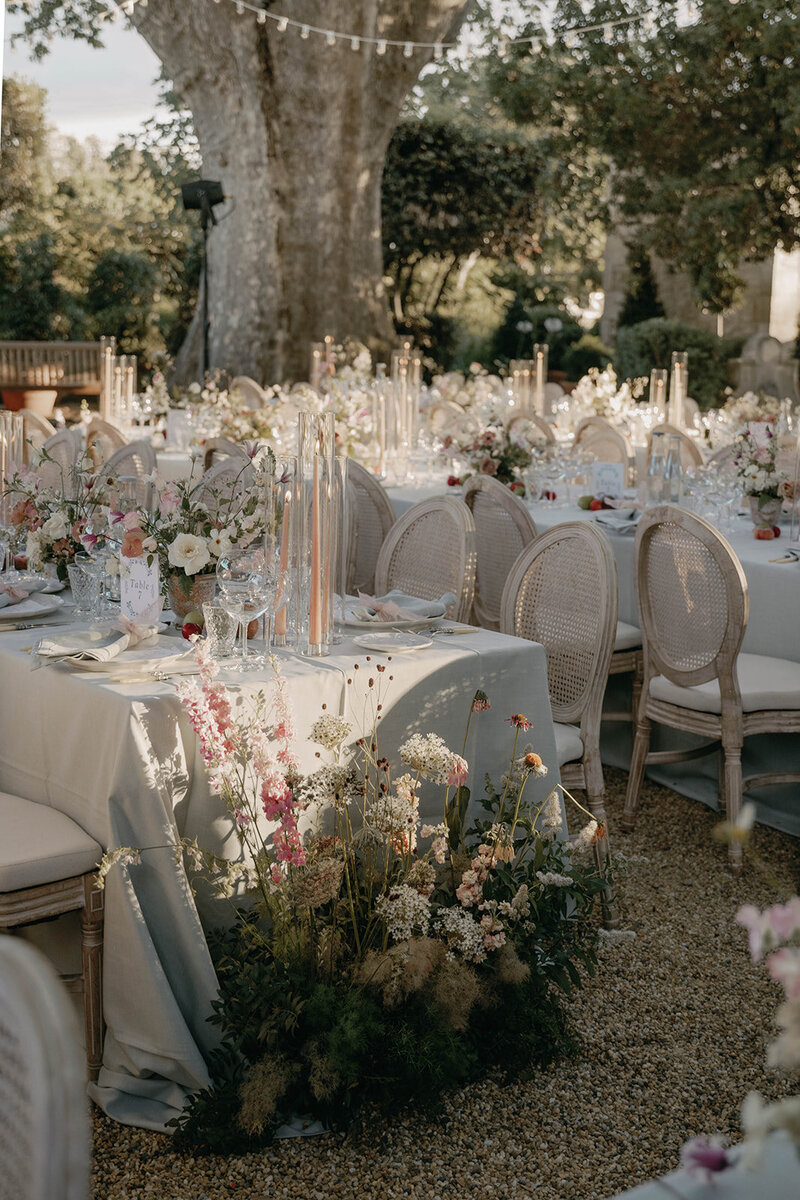


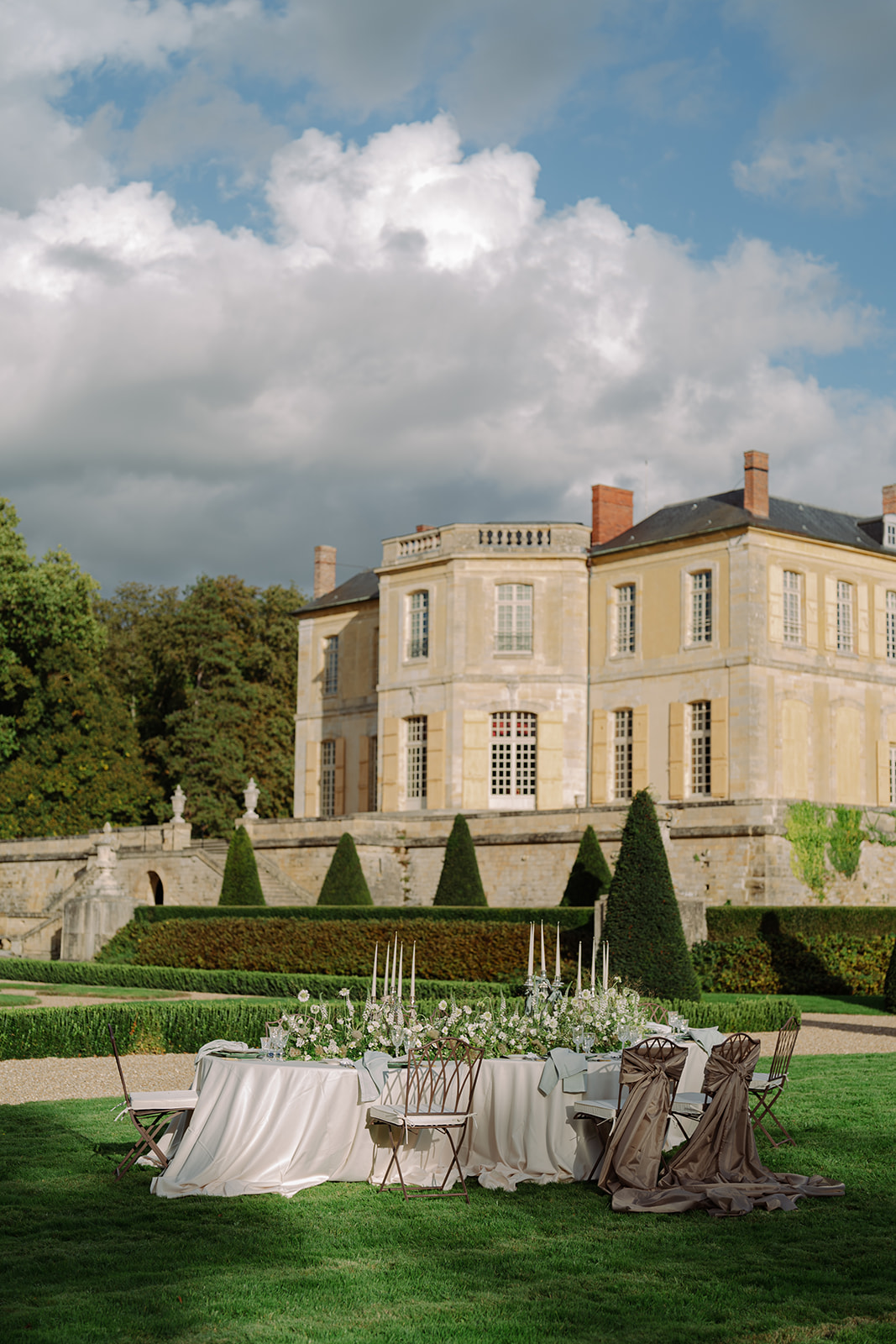
Before choosing a single flower, I observe the venue. I feel it. I almost listen to it. This is a step my clients rarely see. And yet it shapes everything that follows. Thanks to my training in landscape architecture, I read spaces in a particular way. I look for the structure first, long before I think about colour or scent. Here is how I build this diagnosis, step by step, through a few of the venues I’ve had the privilege of dressing in flowers.
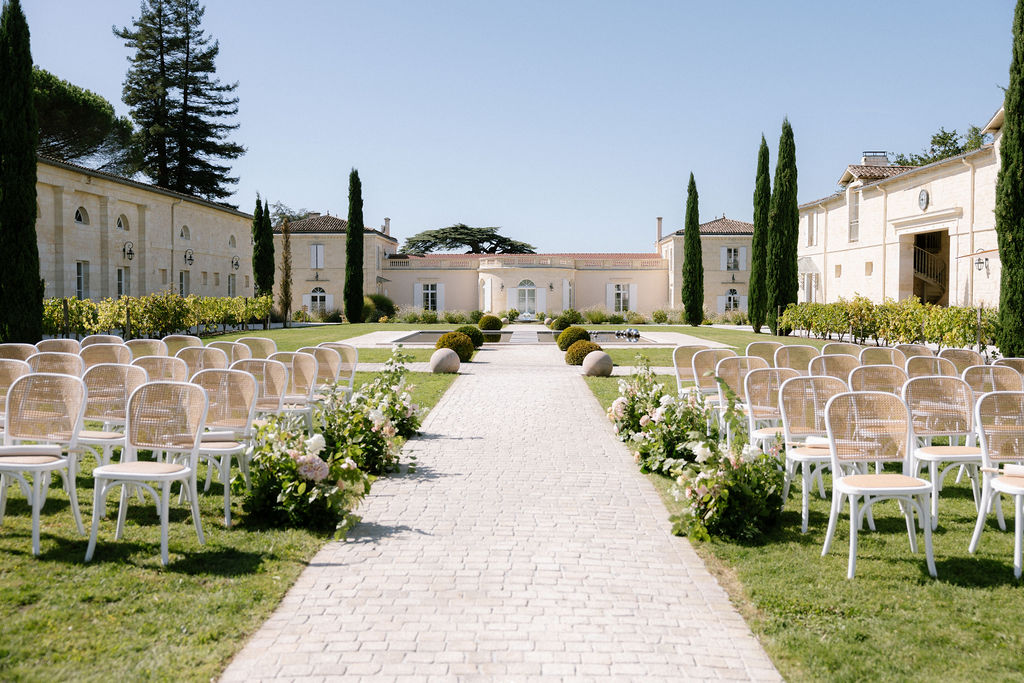
Perspectives, my first point of reference
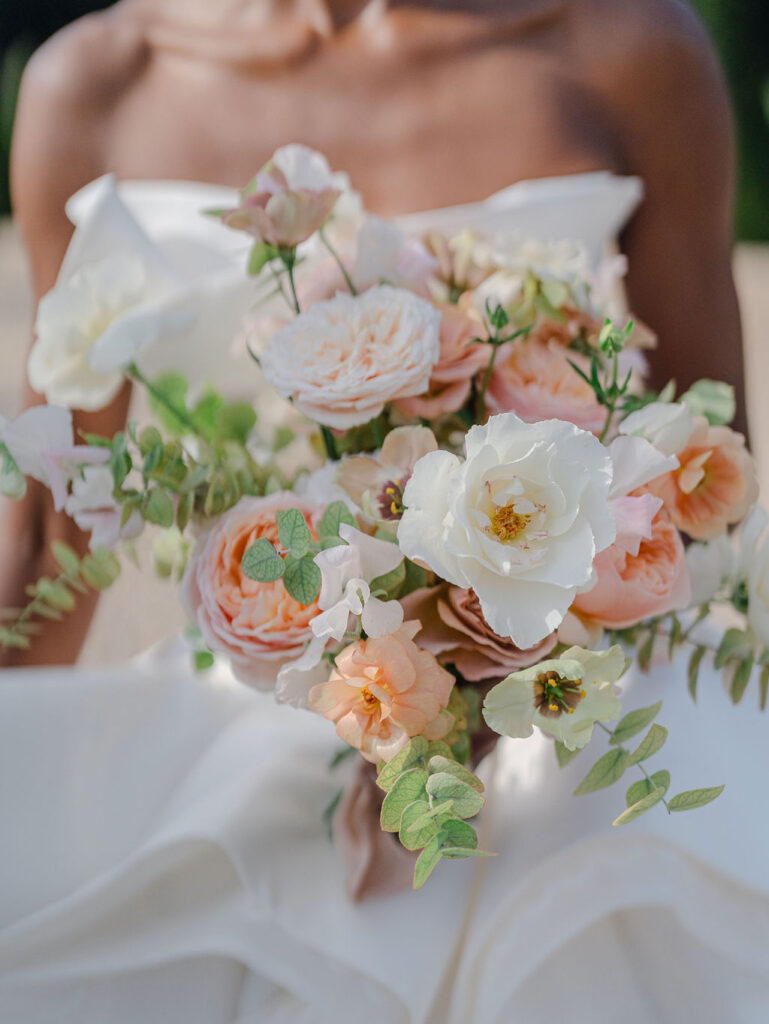
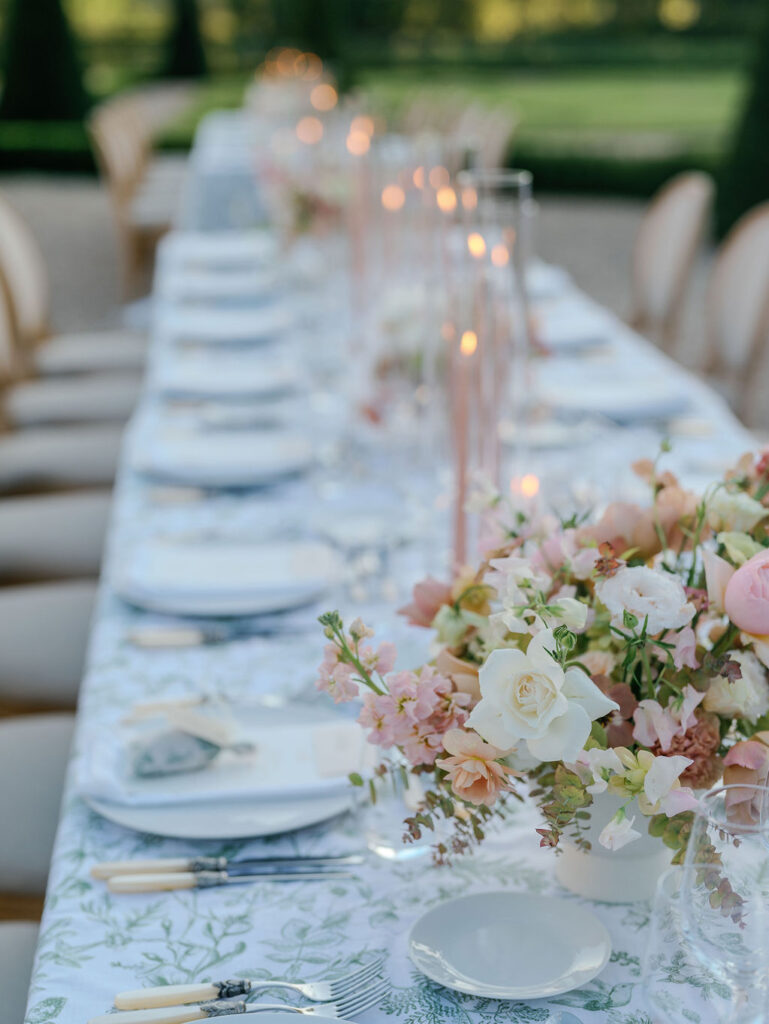
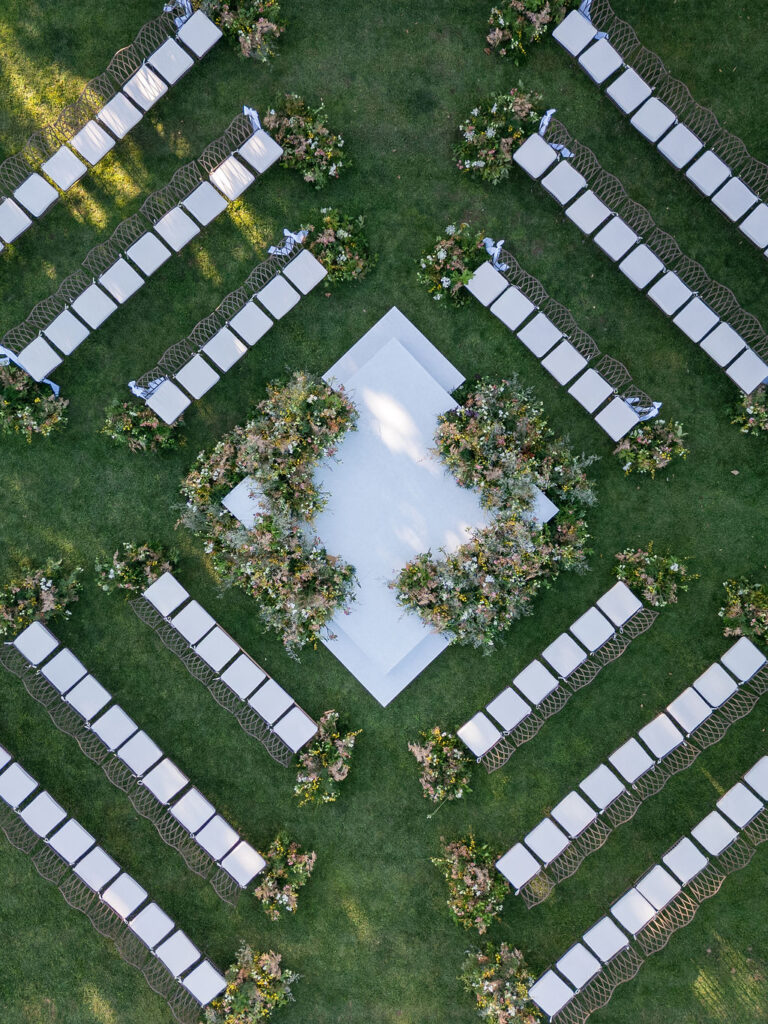
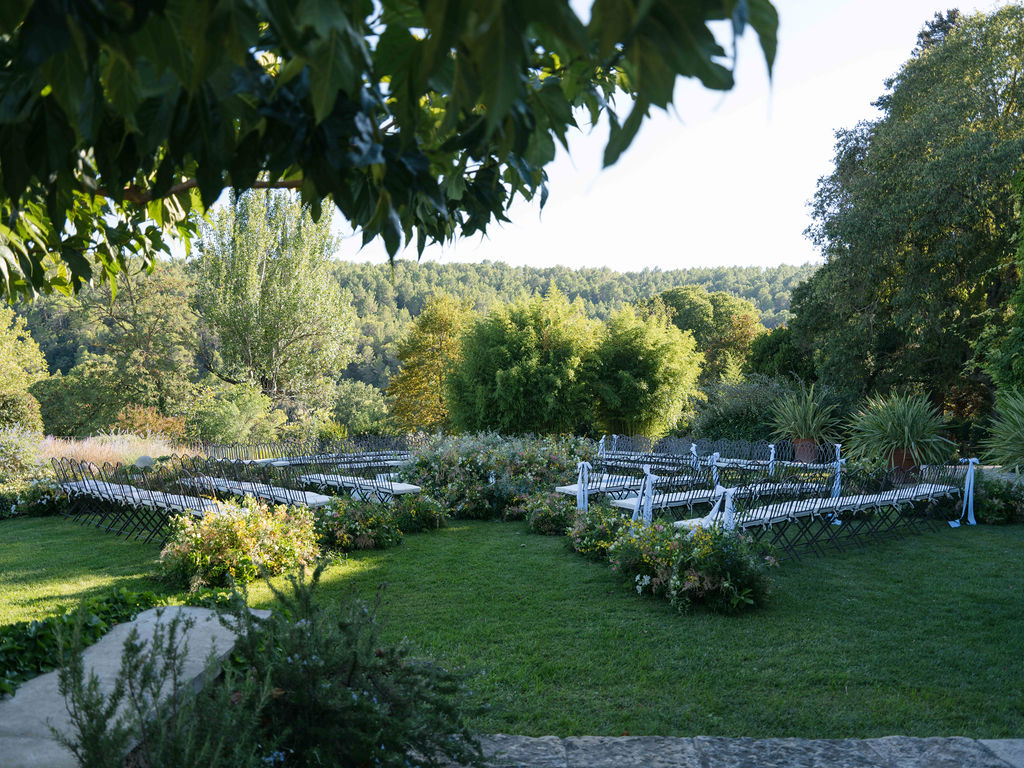
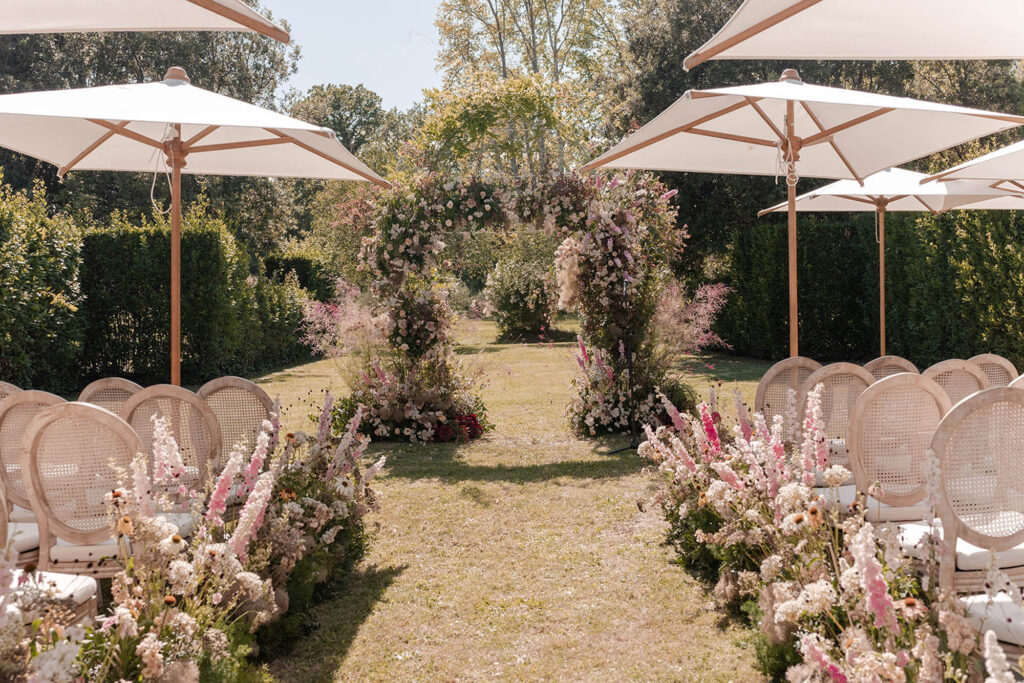
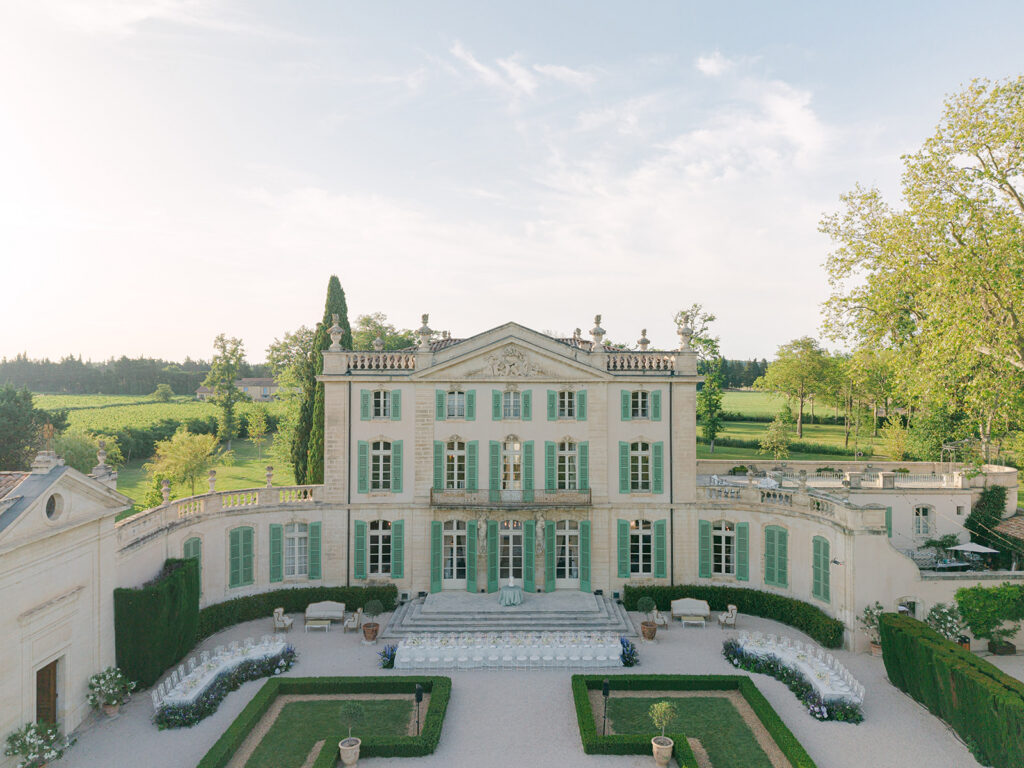
When I arrive at a venue, I first identify the sightlines. Where does my eye naturally get drawn? Which point in the garden or the room catches the gaze first? This reading of perspectives tells me where to place a floral composition. My aim is to accompany the space’s natural movement, not work against it. At Château de Villette, I’ve had the chance to dress two weddings. There, I followed the symmetrical axis of the classical French garden designed by Le Nôtre. I positioned the ceremony arch exactly in line with the main perspective. That way, every guest is naturally guided toward it as they take their seats.
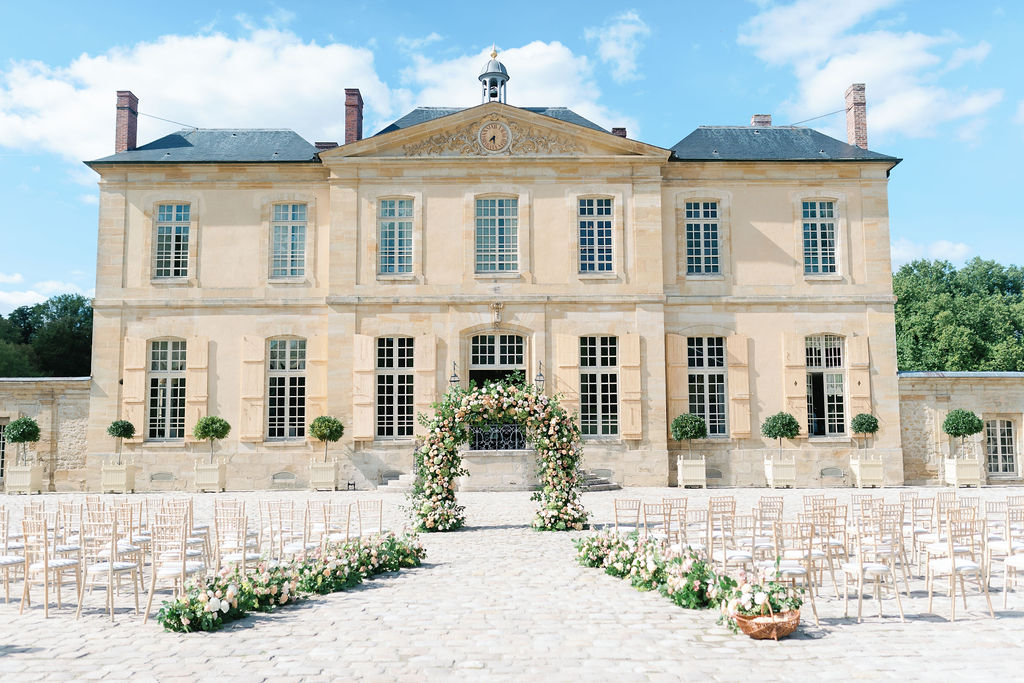
Ceiling height, a constraint I turn into an opportunity
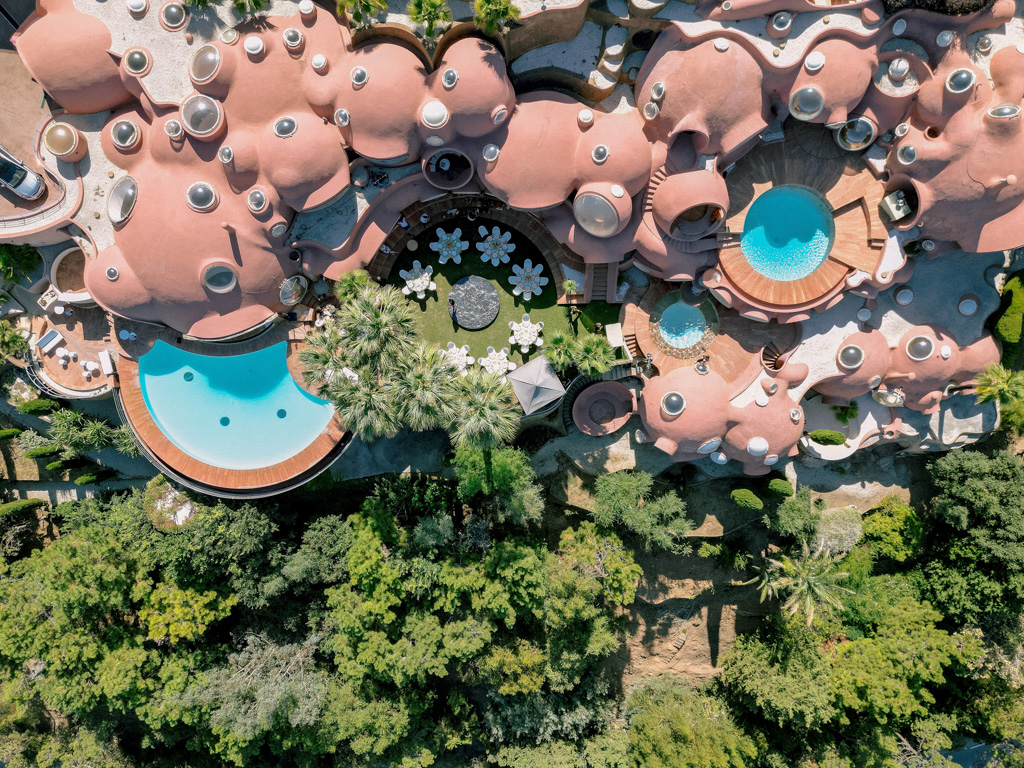
Next, I measure the ceiling height, almost instinctively. I never dress a low ceiling the way I would a glasshouse or a renovated barn. Where the space feels compressed, I favour low, dense compositions. This way, the eye never feels crushed. At Palais Bulles, on the French Riviera, the venue has organic architecture and rounded ceilings designed by architect Antti Lovag. They pushed me toward low, almost sculptural compositions. I shaped them to hug the venue’s curves rather than compete with them. When height allows it, I do the opposite. I imagine soaring floral installations, to fill the void without ever cluttering it.
Light, which reveals a flower’s true colours
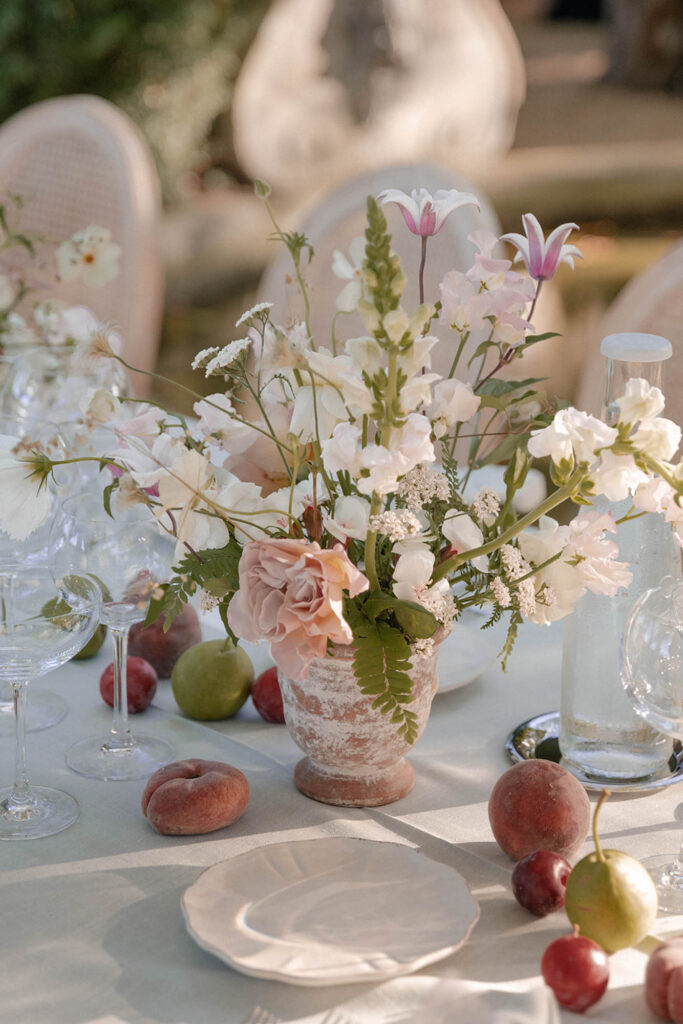
Light is undoubtedly the most decisive element. Yet it’s also the most often overlooked. I never perceive the same flower the same way under two different lights. Soft, golden morning light shows one version of a colour. Artificial evening lighting shows another. That’s why I observe each venue at different times of day, whenever possible. In the vineyards of Château de Berne, in Provence, the golden late-afternoon light led my choice. I picked a palette of peach and terracotta tones. Under cooler lighting, those same shades would have fallen flat. At Provençal sunset, they practically glow.

Materials, for a dialogue with the plants
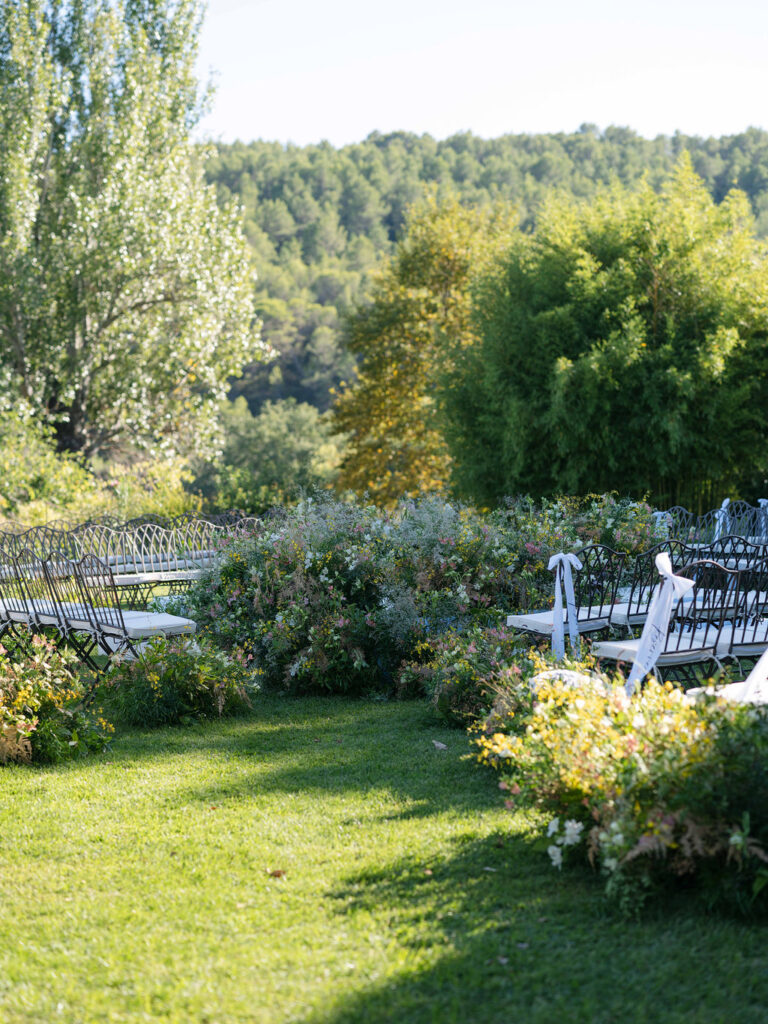
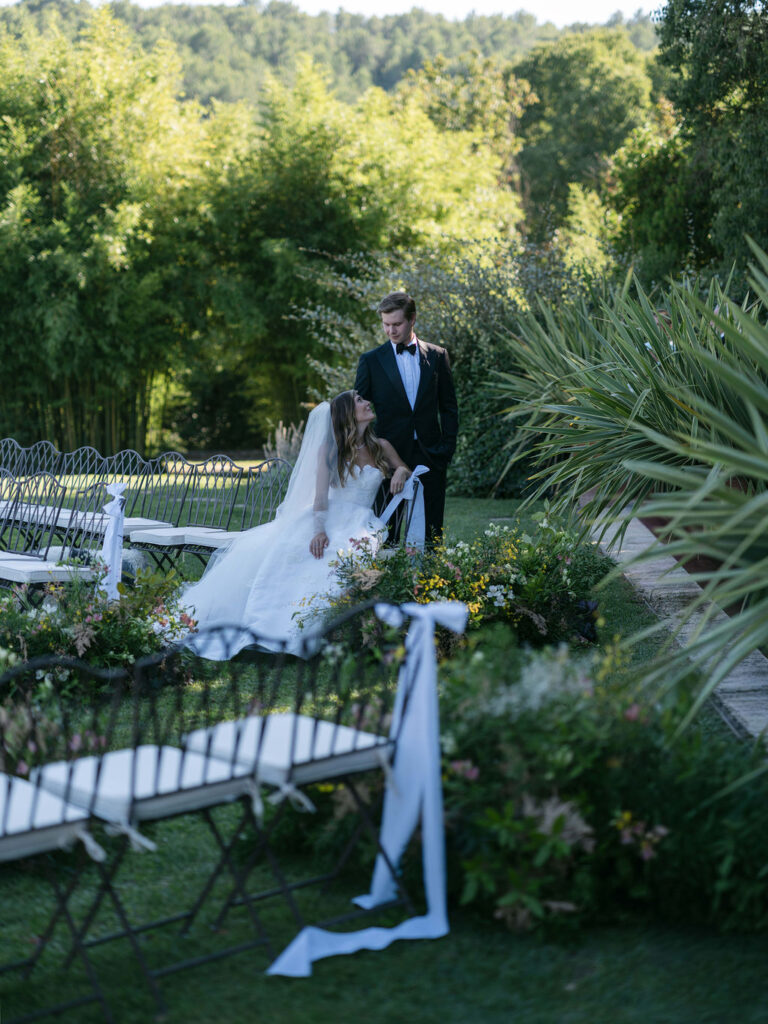
I also study the materials in a venue with close attention: raw stone, weathered wood, cold metal, or glass. These materials already tell a story. I want the flowers I choose to enter into dialogue with them, not simply sit on top of them. At Domaine de Chalamon, the raw stone walls and aged barn wood set the tone. They led me toward wilder compositions, mixing loose grasses and meadow flowers. It’s a « meadow wedding » style I particularly enjoy developing there. It echoes the venue’s materials directly.
The garden, when there is one, as a natural extension
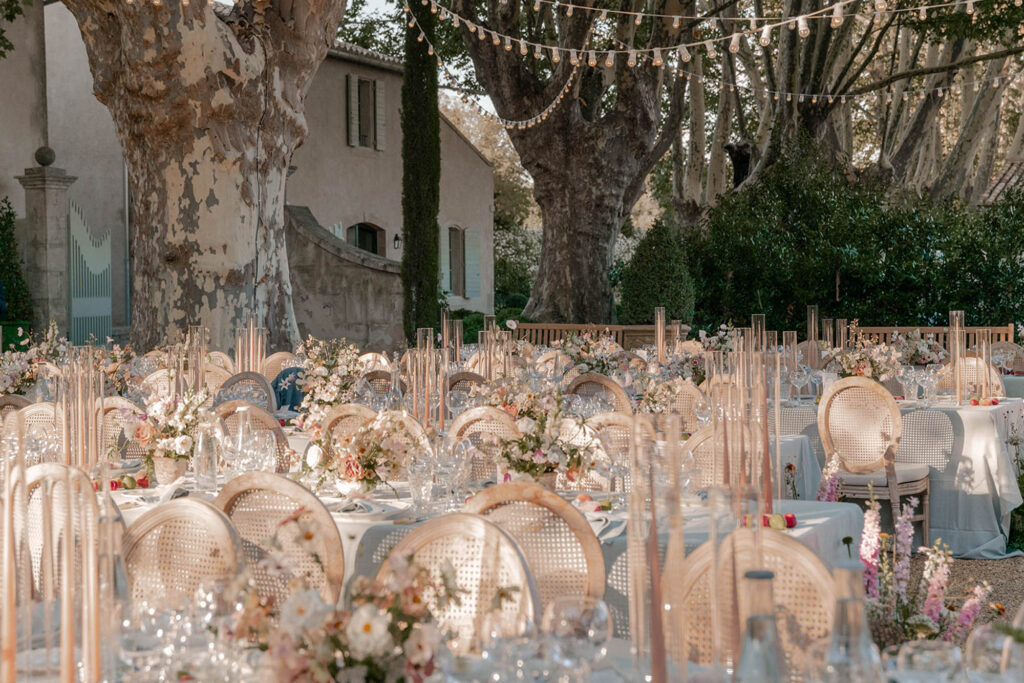
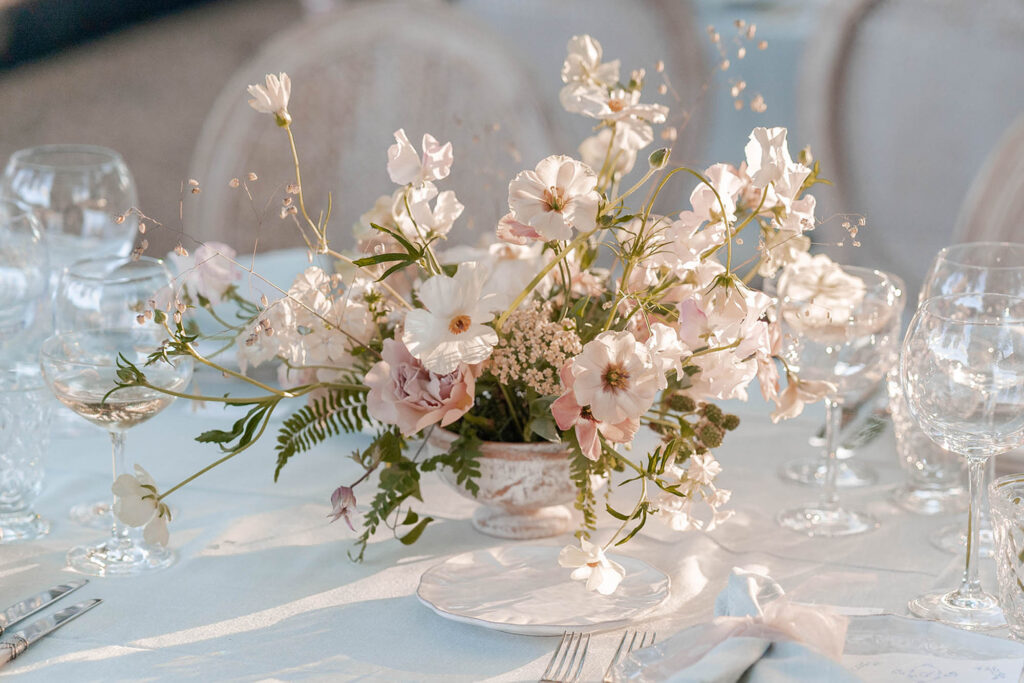
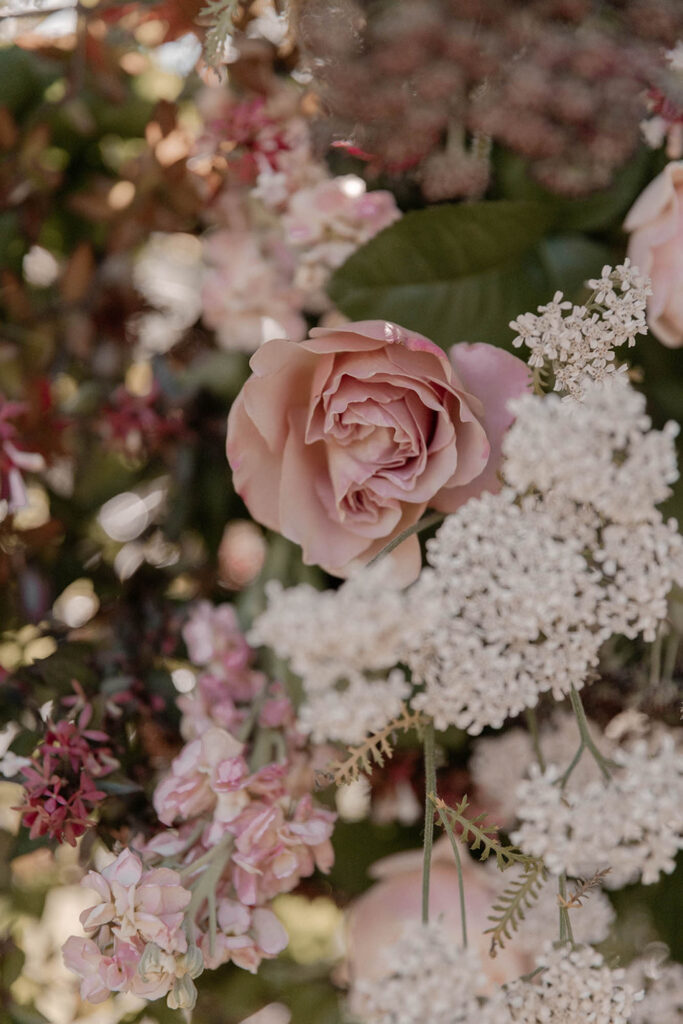
When a garden is present, I treat it as an extension of the venue itself. I factor in the plants already growing there, the existing palette, and the garden’s overall mood. My goal is simple: indoor compositions should never feel disconnected from what’s growing outside. At Château de Tourreau, in Provence, the garden already held old roses and lavender. They became the starting point for the wedding’s entire floral palette. Really, all I did was extend indoors what was already growing outside. This is precisely where my training in landscape architecture comes into its own. It gives me a holistic reading. I think of indoors and outdoors as a single landscape.
A method, above all
This observation work is never, for me, a mere aesthetic formality. It’s the foundation I build every floral choice on. That’s why I treat this step as a priority. Without it, my flowers would risk being merely pretty, never truly right. What I’m after isn’t the isolated prettiness of a bouquet. It’s a harmony conceived with the venue as a whole. I can only reach that harmony by looking, before I create.
If you’re planning a wedding or an event, I’d love to bring that same eye to your venue. Explore my portfolio or get in touch to talk it through.